Holidays & Healing
Happy winter! This newsletter is a bit of a doozy— as my friends could tell you, I can’t shut up about the books I’m reading, and apparently I can’t shut up about it here either. Long essay at the bottom if you want to hear about it!
WHAT’S NEW
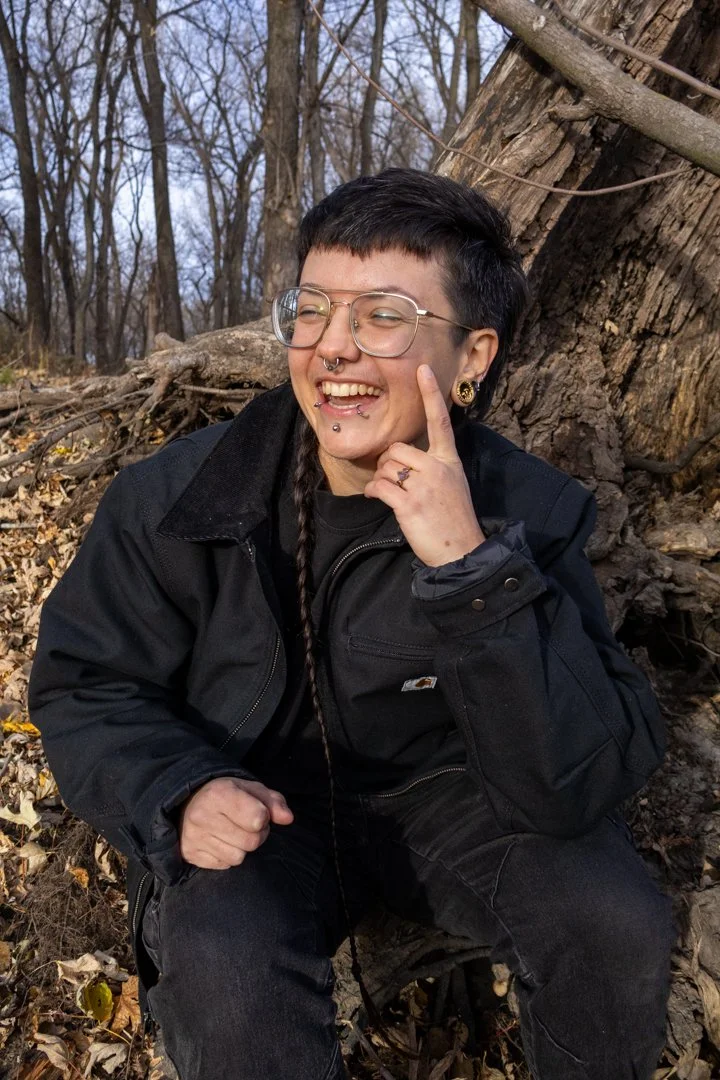
Photo credit May Whitsitt
I got new headshots!! Very excited to have some photos that look more like what I look like now— keep an eye out for this smily lil mug on the back of any new books I write.
GOOD GRIEF: WRITING POEMS ABOUT LOSS
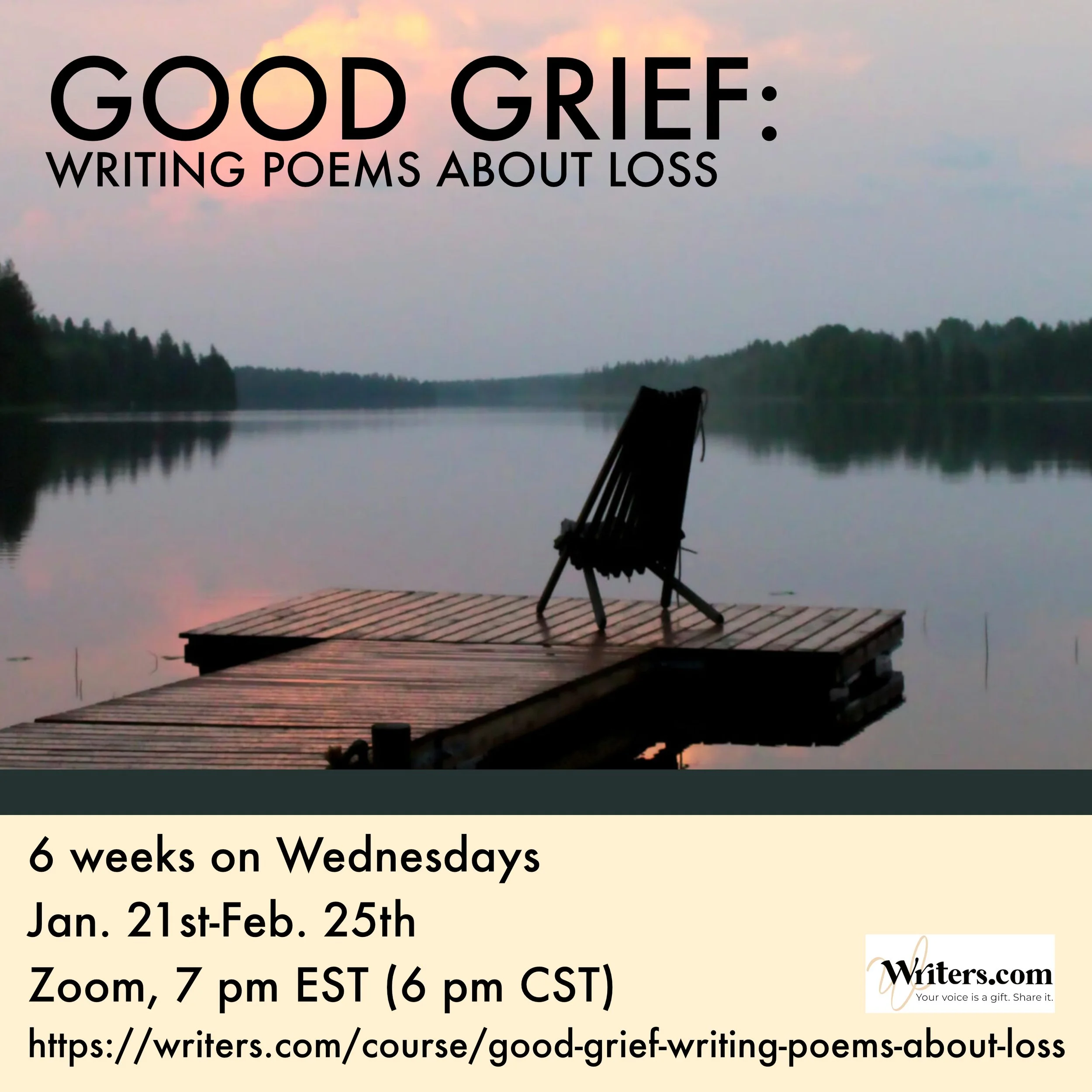
I had such a good time running a workshop-only version of this that I’ve decided to expand it into a full class format through Writers.com!
More info:
This series will approach writing about grief and loss from a wide variety of angles, including structure, form, and even, at times, humor. You’ll get plenty of practice writing with exercises, including specifically tailored writing prompts that we will complete each week in-class. You’ll learn from the best, studying contemporary poets like Danez Smith, Andrea Gibson, and Sam Sax. At the end of this course, you’ll have at least 6 new poems and an expanded idea of what writing about grief can look like.
You’ll have the opportunity for weekly one-on-one instructor feedback from me, if you are interested in editing your poems. This course also includes weekly bonus prompts if you want to continue writing outside of class.
You can register here: https://writers.com/course/good-grief-writing-poems-about-loss
PROMPT
If you want to do a little writing, here’s a prompt:
Write a love letter to someone or something that has betrayed you.
Have fun, and don’t be afraid to be bad!
POEM
I had the joy of having a poem published in like a field. It’s a bit of a unique topic, and not something I think I’ve ever written about. You can check it out here:
https://www.likeafield.com/2025/fall/ollie-schminkey/woods-in-winter
PETE
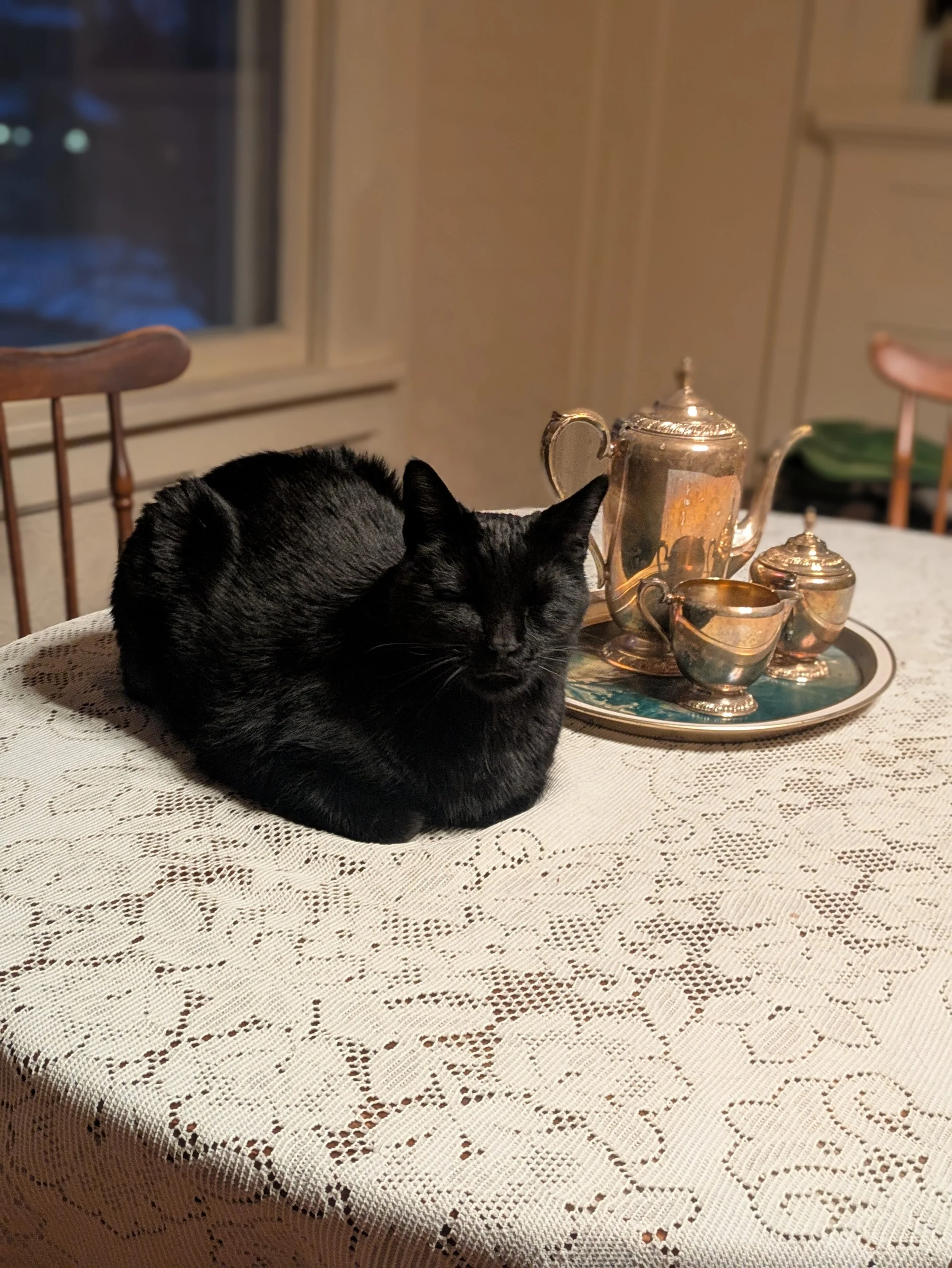
Would you like some tea, sir?
OLLIE’S THOUGHT CORNER
think, think, think, think….
Maybe Reading Copious Amounts of Gay Smut Healed My Sexual Trauma (?)
Hi friends, and happy December!
Nothing says holiday spirit quite like gay smut . . . I mean, “romance!” (Ho, ho . . . ho?)
I have a secret: as someone whose life revolves around poetry, I actually don’t read much poetry as part of my leisure. I end up reading a lot of poetry while I’m teaching classes, working on projects, attending community events, etc, so when I’m settling down with something over lunch, I tend to reach for fiction.
My favorite genre for a long time has been queer historical fiction (and often queer sci fi/fantasy), but I enjoy a lot of things. Powerhouses I’ve poured through include authors like Sarah Waters, Emma Donoghue (she’ll break your heart, though-- be careful!), and Tamsyn Muir’s The Locked Tomb series. But it wasn’t until fairly recently that I was sucked into the true world of romance writing, where the plot is often just a humble vehicle (a 2003 Toyota Camry, perhaps?) to allow readers to fall in love with someone else falling in love. And, yeah, ok sure, maybe we’re not here just for the love story . . . we may also be here for the explicit, lengthy, and frequent scenes of . . . uh, other stuff.
One issue with being a lover of primarily sapphic and trans-geared fiction is that the genre is still quite small. Don’t get me wrong-- I am constantly astounded at how much more there is than when I was in college. Compared to ten years ago, I am spoiled rotten with queer choice. But when I was preparing for top surgery last January, I had currently exhausted my list of recs and the backlog on my shelf, and I wanted to prep myself with some books that were easy, fun, and guaranteed to have a happy ending. And then, one day, as I was innocently perusing a local bookstore (shoutout Moon Palace Books), I stumbled upon a Cat Sebastian book, and I did something I never thought I would do . . . read a book about men.
At the risk of encouraging my own rambling, I want to jump in with a little bit of context here. The first bit of context is that, about halfway through college, I got fed up with reading bad books by men, and books by cisgender men in general. I was sick of reading what real men thought fake men would do. I was sick of hearing what men had to say. I was sick of the causal misogyny, of the violence, of the unmistakable queerphobia in their characters. I knew what men imagined, I knew what worlds they created-- their worlds and writing were shoved down my throat at every opportunity since I was fricken born. I had reached my breaking point, and vowed to never again to waste my leisure time reading a book that was written by a cisgender heterosexual man. Since then, I’ve broken that “rule,” because some books by cishet men are actually good (#notallmen ?), but it radically changed how my bookshelf looked, who I got to see represented in the stories I read for fun, and it ultimately helped me to be able to see myself in a more expansive light. Now, a book written about a man or by a man is chosen on purpose after careful thought, not by default of the patriarchy.
As someone who grew up dating a lot of men, and then in college very quickly switched to dating literally anyone else, I did not think that MM romance (male/male; queer men falling in love) had anything to offer me. I did not want to read about one man falling in love-- why would I want to read about two? (Double the men, double the risk, right?) Respectfully, I simply just did not think it had anything to do with me. Although I’m non-binary, my life and experience post coming out has always been more firmly rooted in sapphic communities and experiences than queer male ones. Books about gay male experience should absolutely exist, but why would they do anything for me?
Well, dear reader, turns out, I was very wrong, and they do a lot for me. About 30 books into what is definitely not an obsession, I can tell you that I care deeply about these fictional men, their lives, their pleasure, their happiness. I care deeply about their insecurities, their fears, even the sports they play and the frat parties they attend.
I wonder how much of this has to do with the way these books are written (I mean, we do care about people who are different than us all the time-- it’s called empathy), or how much it might have to do with me connecting more strongly with masculinity after top surgery. I also wonder how much it has to do with the fact that the majority of these MM books and male characters that I’m reading are written by women, and the male characters tend to be emotionally connected, consent-focused, sensitive, and genuine. (All of the things that many of the real men in my life have historically not been). I’m sure there’s also plenty of MM romance out there where the men are total jerks, but that’s not what I’m reading (so let’s ignore it for now). I’m reading books about sweet, loving cutie pies who are total honeys-- who make each other friendship bracelets even though they play for the NHL, who say their feelings out loud and leave each other love notes.
Side note: I want to acknowledge that these cis women authors are also part of a complicated conversation and dynamic that I don’t really feel super qualified to speak on, but that I know many real life queer men have legitimate issue with. It’s part of a much wider conversation about letting people tell their own stories and represent themselves accurately, and I want to be respectful of that here while also acknowledging how much these books have done for me. (Goodness knows I often don’t love it when cis straight people try to tell stories about people like me, and I think many of these critiques carry a lot of validity). So here’s my caveat that you should also read books written by queer men about queer men, and many of these books also feature well-rounded, relatable male characters (and you must, must read the book version of Call Me By Your Name. Fair warning, it is not a bubblegum happy ending but does, in my opinion, offer a gentler ending than the movie). But since my entry point into MM romance is through cis women authors, I’ll be focused mostly on that for the rest of this (increasingly long) little essay.
That being said, we’ve finally hit the main point of this thought-pile. I can say, without exaggeration, that reading MM romance has done more to heal my sexual trauma than literal years of talk therapy, or honestly, pretty much anything else I’ve tried. About 15 years ago, I experienced a sexually and emotionally abusive relationship that led to years of repeat assault, questionably consensual situations, downright nonconsensual situations, and over a decade of traumatic fallout. My nervous system was absolutely trashed, and my relationship to pleasure has always been complicated and difficult. Although I’ve definitely done a lot of work in that time (which talk therapy was an important part of, don’t get me wrong), I never truly felt entirely comfortable, safe, and free in my body when it came to sex. I am constantly astounded that it has taken literally fifteen years to develop a strong sense of sexual agency and comfort. And I am even more astounded that the thing that unlocked that sense was reading about men kissing each other (alright, and a bit more than kissing).
Here are my theories:
In my real life, male sexual desire has shown up for me as primarily violent, uncomfortable, and unpleasurable. In The Body Keeps the Score (great book, by the way), Bessel van der Kolk talks about how sometimes, when trauma lives in the body, you need new experiences in the body to rewire those traumatic experiences. By this he means that talk therapy is not always the most effective therapy, and he talks about treating sexual trauma with things like movement, yoga, etc. This isn't to say that you should try to rewire your brain post-trauma by boning every man in sight (I tried that, and unfortunately, it did not bear good results, since many of those situations were not healthy, safe, or comfortable-- so my brain didn't get rewired with safety but instead just got worse). But I do think there has been something about reading dozens of stories about men, whose sexual desire is never violent and never coercive, that has helped to reshape some of my neural pathways in terms of what male sexual desire can be. It helps to place my own experience within a wider embodied context of male desire, as one point in an expansive system, rather than the entirety of it. There's something here about how trauma is a memory that can't be integrated into your regular memories-- these books have, in some way, perhaps provided new “memories” that have helped my traumatic ones to integrate more fully. And within the safe context of fiction, there was no risk of re-traumatization.
In these books, men are real people. This might seem like a wacky statement-- of course men are people, right? But as someone who has loved many men (and of course, many women), I have often experienced cisgender men in my life as quite two-dimensional, lacking the intuitive emotional skills of the cis women in my life (and the trans and non-binary people in my life). Men have showed up for me emotionally largely as somewhere between a dog and an overgrown child, except they're allowed to make laws, own guns, and rape people with little to no consequences. Jokes aside, there is something about these queer male characters written by women that feels so inherently human to me-- the gendered dynamics come out feeling deeply resonant to my own non-binary experience of gender. These men have motivations beyond toxic masculinity. These books are often placed in typically hyper masculine settings: hockey, the military, small towns, frat houses. And yet these men are still soft: they platonically kiss their friends on the forehead, they ask consent, they double check, they go shopping together, they remember each other's birthdays and read each other's favorite books. They do the things that I would do, even though I am not a hockey player or a frat bro (although I have been lifting weights…)
Same meets same, queer sees queer, and gendered dynamics enter a safe little bubble. I wonder how much of this feeling of safety I get reading this books is due to the fact that there is a more even gendered power dynamic. I’ve tried reading cis het romance from time to time when my Libby holds are backed up, and I always just end up feeling kind of bad for the girl. The men in straight romances are also written by women, but they don’t have the same “human” feel to me-- they are almost always domineering, gross, semi-consensual, and have ugly haircuts. And the women characters? All they seem to do is be nervous and wait around for the guy to do something. (But their haircuts are usually fine).
Or maybe it’s because queer stuff is just . . . better? I want to talk for a minute about queer sex, and this really cool phenomenon that happens when you’re with someone who has the same/similar parts as you. I’m sure there’s a word for it out there somewhere, but I think of it as a sort of “pleasure doubling.” Of course, everyone has different preferences and everyone’s body experiences pleasure differently, but there’s something to be said for giving a touch and knowing what that touch feels like on your own body. It makes giving also a type of imagined receiving, which invites a kind of reciprocity that, in my life, has been unique to queer relationships. I think this pleasure doubling phenomenon also helps to ground these MM characters as “safe” in my mind; there is not one person who is trying to “take” more than the other-- and it also extends a bridge of queer kinship. I love queer people, and I want them to be happy and to experience nice things.
And maybe timing has something to do with it. I simply feel better in my own body post-top surgery (not to mention the testosterone boost from lifting weights does wonders for the libido). Maybe feeling more connected and authentic within myself has helped me to feel safer in my own body, which has allowed me to break through some of my trauma responses. I’m also the most connected to my own gendered masculinity that I’ve ever been, which probably makes it easier to relate to fictional men. Although I’m non-binary, this is the most masculine-of-center I’ve ever felt (and it feels great).
I used to think that the things that happened to me in high school would cast a type of forever-stain on me, that I would probably always be on edge, find it difficult to relax, and at my core, remain insecure and subconsciously fearful. Beginning with my introduction to sex (and continuing on for many years until I stopped dating men), my experiences were filled with non- and semi-consensual situations, where my pleasure mattered very little. It felt like these were the building blocks of my fundamental relationship to sexuality, and I struggled very hard to learn new lessons and develop a new relationship with myself. Because there wasn’t anything good for me to return to-- I had to learn it for the first time. Being traumatized was not one thing that had happened to me-- it was the literal core of how I was taught to relate to my body. I’ve spent much of my adult life feeling stuck, “behind,” and disconnected, despite incredibly loving partners who felt that my pleasure mattered very much, who were patient and kind and invested. I’ve been stuck wondering how long I would be forced to suffer from something that happened to me when I was so young. When would I ever get to be “done?” When would I ever get to be “free?” When would it ever be easy, where I could show up authentically and without lingering shame?
Well, fifteen years later, I can’t believe I get to say that the time is now. Although I’m sure this trauma will continue to show up for me in other ways, and I might still have difficult moments, this past year has brought an immense amount of healing for me, at a time and through a medium that I least expected. I’m doing the best I have ever done (in my whole life!), and it’s all thanks to MM smut (and perhaps the skillful work of Dr. Buckley). So here’s a genuine, heartfelt thank you to Cat Sebastian for being my gateway (how I love everything you’ve ever written). And to Saxon James and Eden Finley for writing so many gentle books for me to fall into once I was hooked-- I doubt you wrote the Puckboy series with the intention of healing a 30-something non-binary person’s sexual trauma, and yet, here we are. I began the Puckboy series out of order, with #6 (because it randomly showed up on my Libby app), but when Bilson and Miles fell in love, I knew I was in it for the long haul. Go Nashville.
Xo,
Ollie
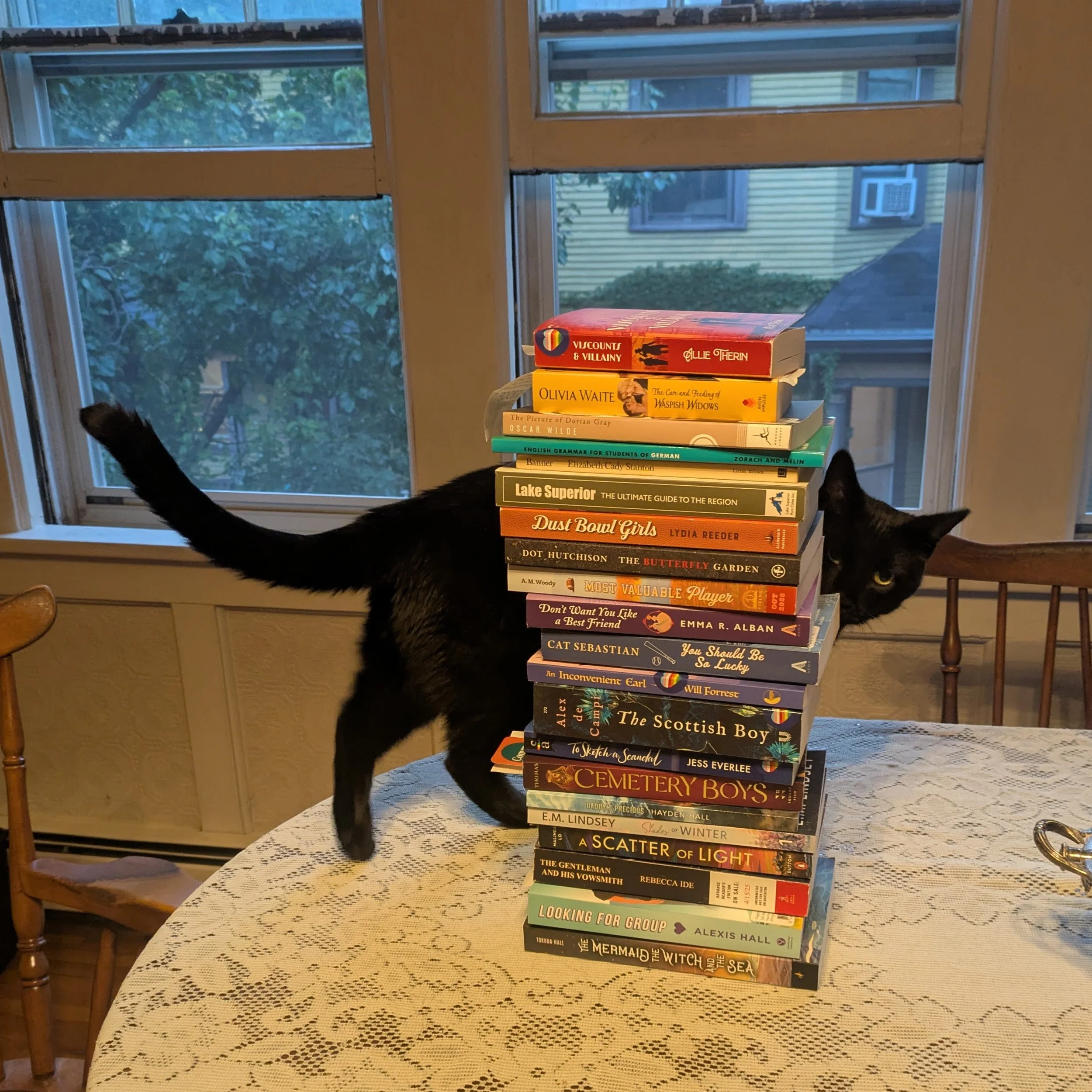
Bonus pic of Pete with my Romance Bookstore Day haul . . . 21 books is a totally normal amount, right? Right???